Purpose
Construct a multipurpose pond to increase water access and support nature-friendly alternative livelihood options for the Indigenous Magar and Chaudhary communities in Nepal’s Kamdi Corridor.
Climate Impacts
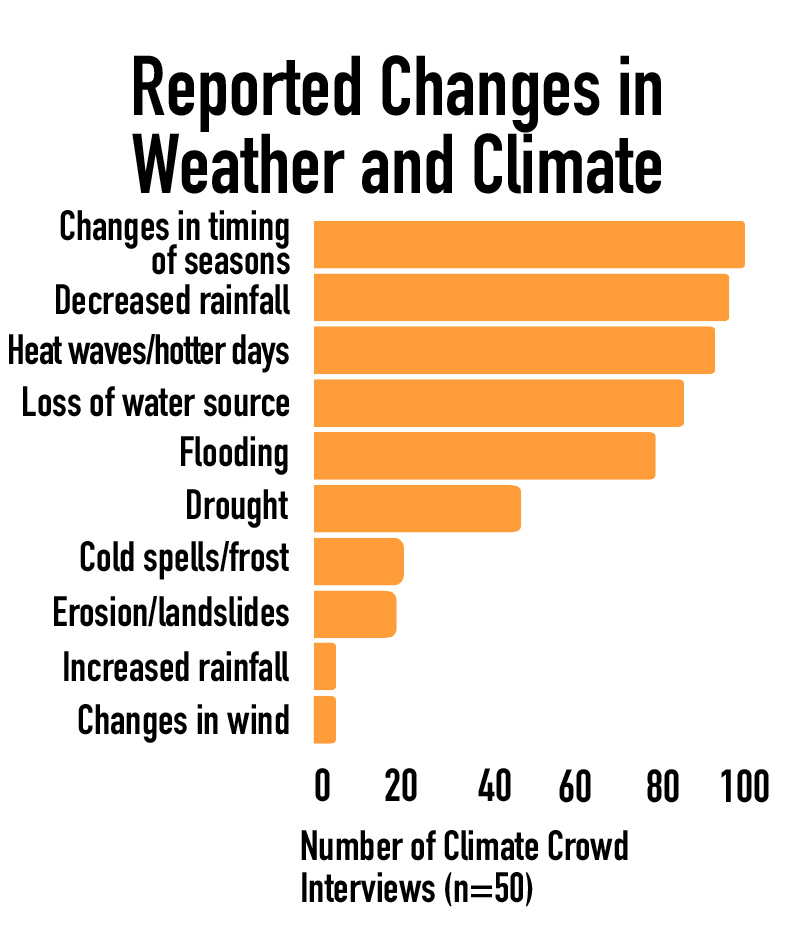
The following impacts were reported by community members in the Kamdi Corridor:
• Decreased availability of freshwater
• Prolonged dry spells and erratic rainfall
• Loss of crops and decrease in livestock productivity due to water scarcity and heat
• Changing livelihoods due to declines in agriculture
• Increase in pests and invasive species
Activities
Planning and design
Discussions with communities and the Division Forest office were held to get approval for the pond construction. Detailed site assessments were also carried out in preparation for the pond construction along with community consultations regarding nature-friendly alternative livelihood options that could be supported by the pond. Ultimately, community members decided on homestays and fish farming for alternative livelihood options.
User group formation
A user group was formed to ensure equitable access and benefit from the pond.
Equipment procurement and site preparation
Equipment for the construction of the pond was procured and a consultant was hired to design the pond. Invasive species and sediment were removed from the construction site.
Pond construction
A 29,000-square foot pond and a canal to supply irrigation water to the village for crop production and fish farming was constructed with the help of the user group. A 85-foot cemented dam was constructed at one end of the pond, and an informational sign was installed to provide the public with project information.
Alternative livelihood preparation
Necessary supplies for fish farming were procured. A total of 10,000 fish hatchlings were distributed to 13 households who expressed interest in the intervention. Five solar panels were also installed to support households interested in homestays with cooking and plumbing. The community and the Agriculture Knowledge Centre were consulted to ensure equal participation and sustainability.
Community training
An awareness campaign was carried out to educate the community on the use and maintenance of the pond. A select few community members were also trained in the sustainable maintenance of the pond, including the handling and removal of invasive species. Those who participated in the fish farming and homestays also received training on fish cultivation and bookkeeping.
project outcomes
project design
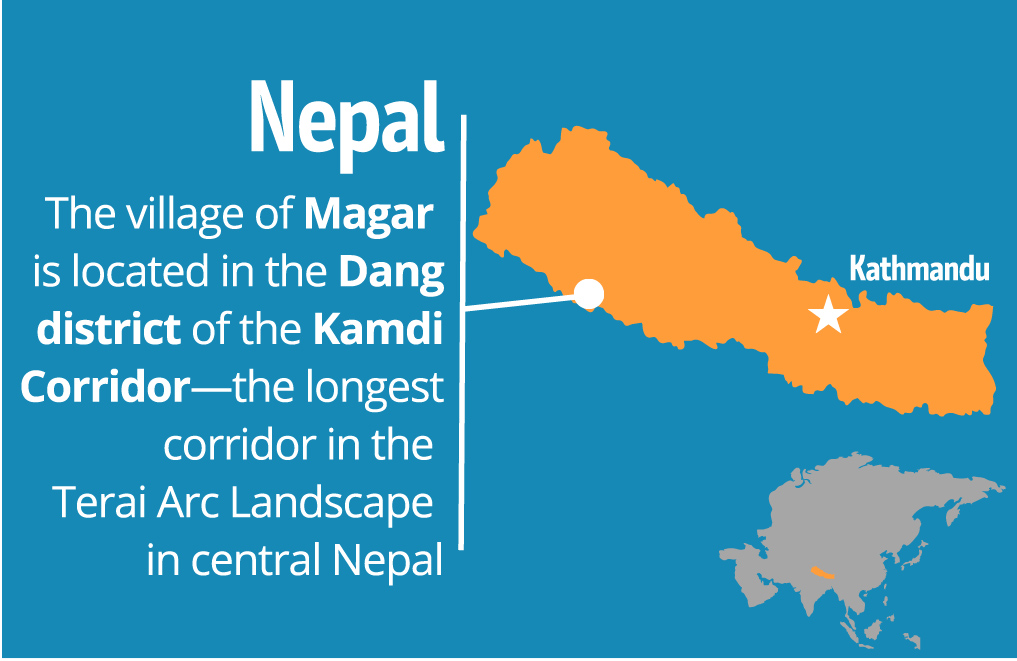
Magar village, in the Rajpur Rural Municipality which is situated at the foothills of the Churia range in Nepal’s Kamdi Corridor, faces significant water scarcity due to the low water retention capacity of the area's soil. This challenge is further aggravated by rising temperatures, prolonged dry spells, and intense, erratic rainfall occurring over short periods. The local community, which depends heavily on monsoon rains for agriculture (like paddy, maize, wheat, and mustard), has been experiencing irregular rainfall patterns and intense heat, leading to declining agricultural productivity and reduced income.
Although a small river runs nearby, its location close to a forest presents challenges in channeling water to agricultural lands due to potential conflicts with wildlife. To address these issues, WWF Nepal constructed a 2,700 square-meter multipurpose pond in Magar village in a degraded wetland with natural water retention capacity to ensure a reliable water supply during dry periods. The water from the pond is used for crop irrigation via a canal connected to the pond and now provides year-round water storage that is used by 22 families for irrigation on 3.14 hectares of farmland. For the first time, households successfully cultivated paddy, eliminating the need to purchase rice from markets. The new system has also reduced time, labor, and electricity costs by over 50% compared to the previous irrigation method of pumping water directly from the river. Residents are now reporting greater water security in all seasons. The pond also helps recharge groundwater by reducing sub-surface flow.
During a preliminary site visit, community members shared their plans to develop homestays in the village as an alternative income source to agriculture. The pond provides multiple benefits, including water for crop production and opportunities for fish farming, which serve as delicacies for tourists and enhance local livelihoods by diversifying income sources in a nature-friendly manner. Fish cultivation was selected as the desired alternative nature-friendly livelihood option based on community consultations, and the Agriculture Knowledge Centre helped inform the varieties of fish to provide to the beneficiary households (grass carp, silver carp, and common carp). A total of 10,000 fish hatchlings were distributed to the interested households.
To further support sustainable living, five solar panels were provided to households interested in creating homestays to help with cooking and plumbing during power outages. Resources for fish and snail cultivation were also provided, and community members were educated and trained in how to maintain the pond, its ecosystem, and home-stay bookkeeping.
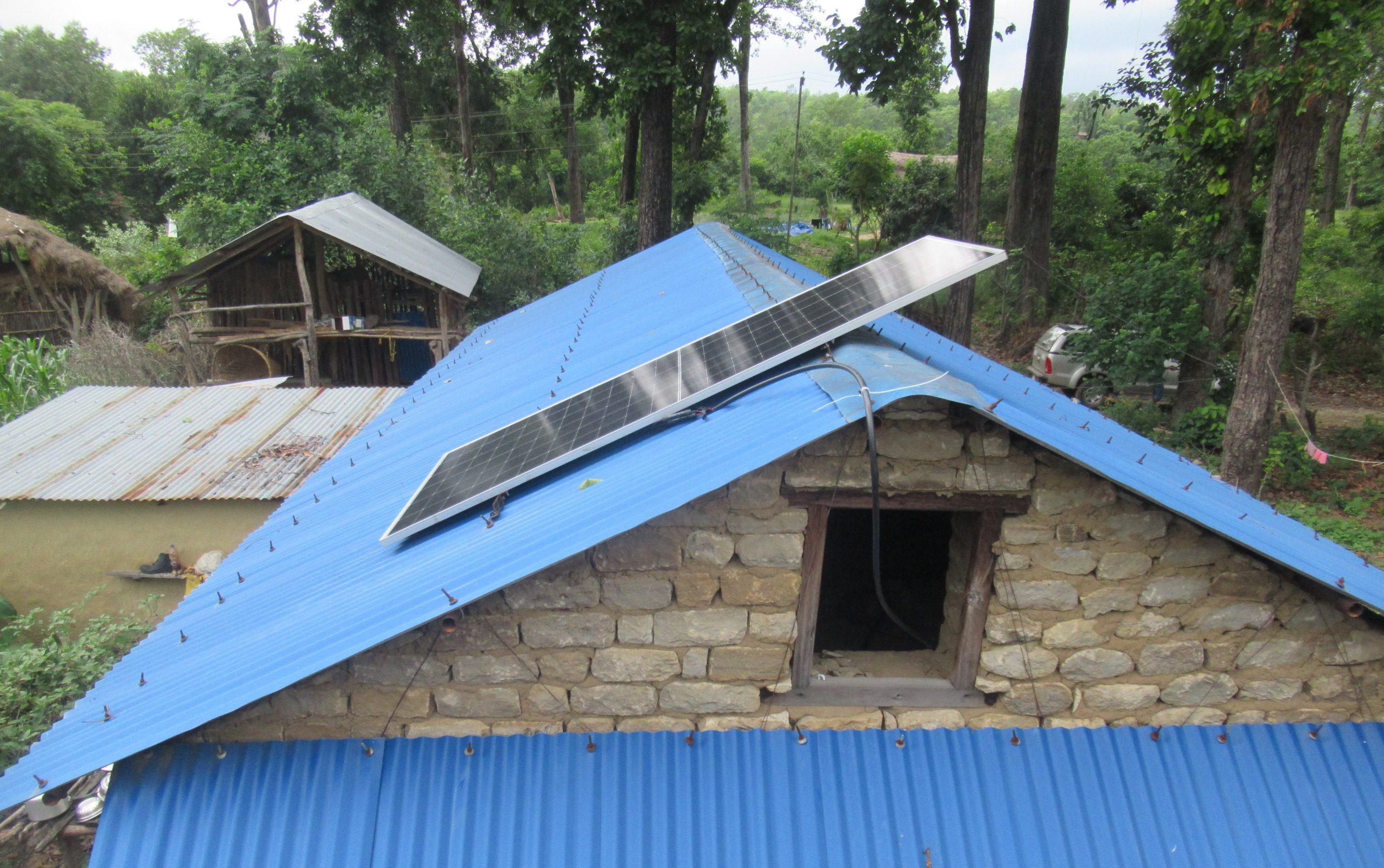
Image credits: Rubina Karki/WWF-Nepal; Tilak Ram Chaudhary/WWF Nepal
The multipurpose pond before and after project interventions
Two project beneficiaries, one in front of her homestay and the other in her mustard field, both made possible through the multipurpose pond